
Pencil Case Materials, Styles, Features Guide
Choosing among pencil case materials requires more than comparing appearance or a single thickness value. Buyers should evaluate the complete construction: substrate, lining, coating or backing, seams, zipper, internal layout, printing process and packaging. Style affects capacity and carton volume, while added features affect assembly and packing. Because material names alone do not establish finished-product performance, the final specification and approved sample should define the order, and any performance or compliance requirement should be confirmed for the actual product and destination market.
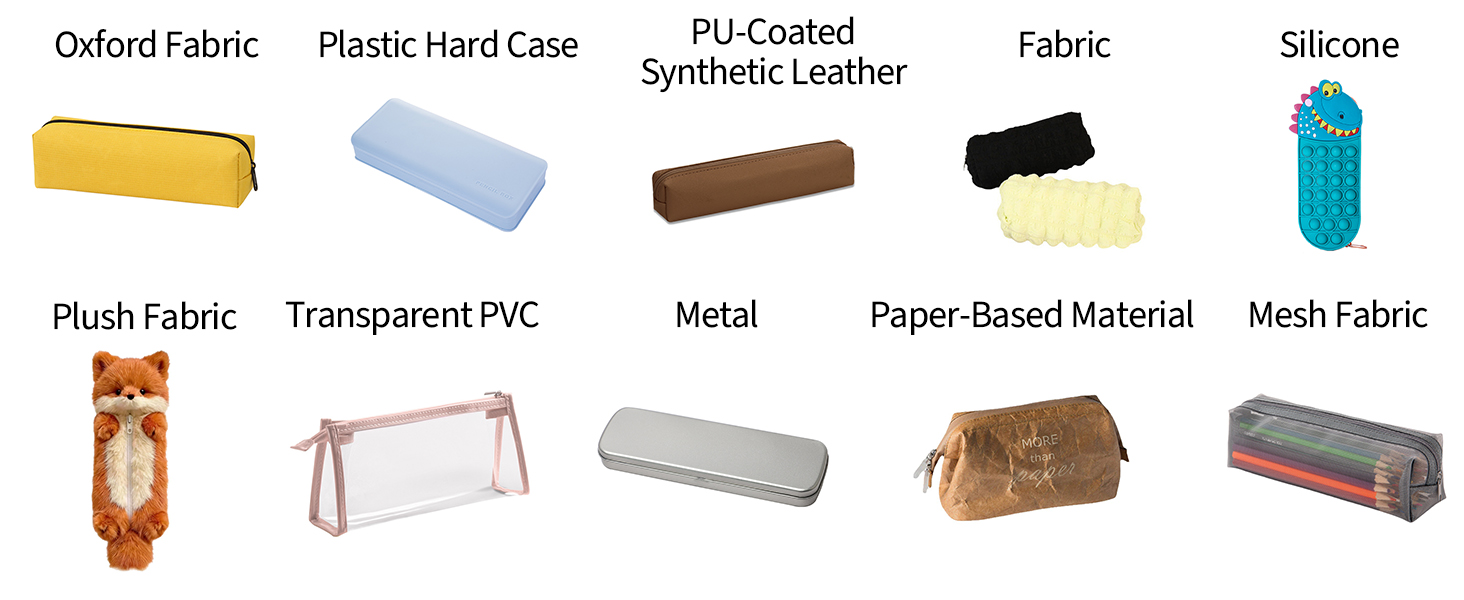
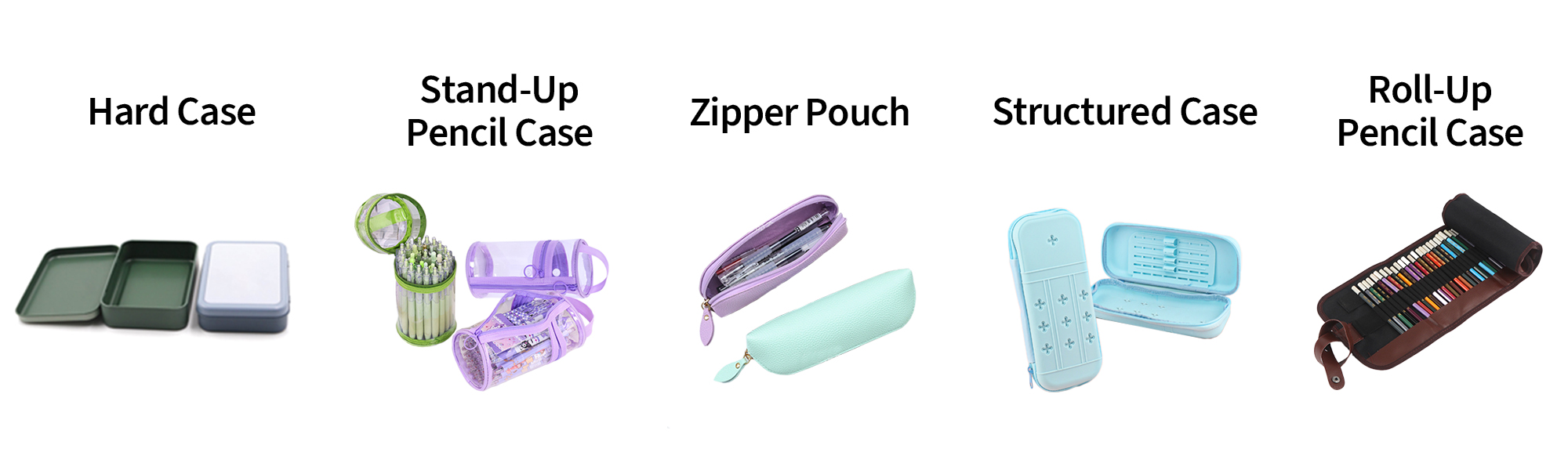
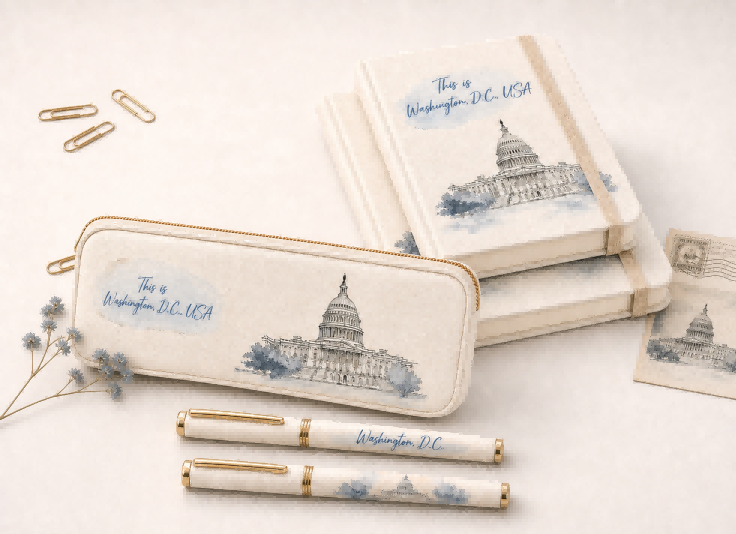
Figure 1. Examples of pencil cases made with different material categories; the labels shown are illustrative product descriptions, not complete technical specifications.
Which Pencil Case Materials Are Commonly Considered, and How Do They Differ?
Common pencil case material categories include PVC, EVA, canvas or cotton, PU-coated or faux-leather materials, nylon or polyester fabrics, and paper-based constructions.
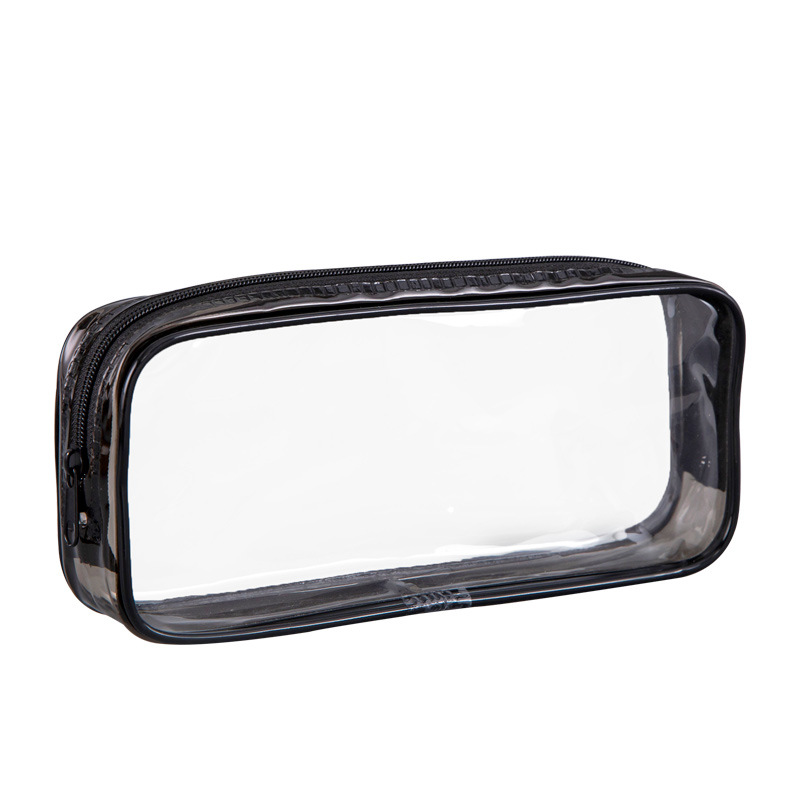
PVC
Transparent or colored PVC constructions may be sealed, stitched or combined with other components. Sheet thickness, formulation, surface treatment and edge construction can affect stiffness, appearance and processing. Buyers should state the required construction in the RFQ rather than accept "standard PVC" as a complete specification. A PVC surface may resist incidental water contact, but seams, openings and zippers can still allow ingress; this does not establish that the finished case is waterproof.
EVA
EVA can be used in shaped or semi-rigid shells. Foam density, thickness, surface skin, texture, lamination and molding construction can influence rigidity, impact behavior and print adhesion. The selected decoration method should be tested on the actual surface.
Canvas / cotton
These fabrics can provide a soft, textile appearance. Finished performance depends on weave, fabric weight, treatment, lining and seam construction. Untreated fabric should not be described as waterproof; any water-repellent claim requires confirmation for the finished construction.
PU-coated / faux-leather materials
These materials can create a business or gift-oriented appearance. Substrate, coating, surface finish, edge treatment and folding conditions influence appearance and durability. Scratch, heat and flexing performance should be checked on the selected material rather than inferred from the category name.
Nylon / polyester fabrics
A fabric description should distinguish yarn denier, finished fabric weight, weave or construction, and coating or backing. A designation such as 600D refers to yarn linear density; it is not the same as fabric weight in GSM and does not by itself define strength, water resistance or quality.
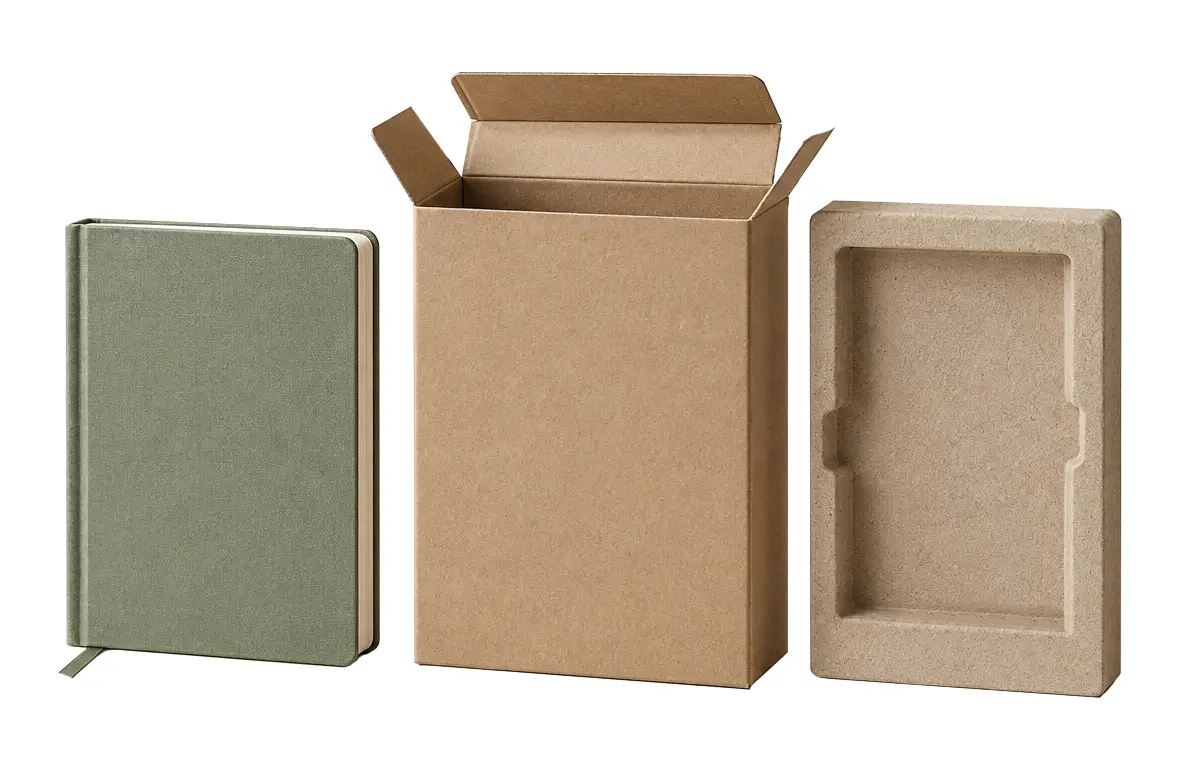
Paper / paperboard
Paper-based cases can support detailed printing, but moisture exposure, repeated folding and edge wear require consideration. Suitability depends on the paperboard structure, surface treatment and intended product life; environmental claims require evidence and should not be inferred from the word "paper."
Which Pencil Case Style Fits Which Buying Scenario?
Style should be matched to tool size, required organization, opening method, display format and shipping volume. No style is automatically the lightest or lowest-cost option because material, size, lining, hardware and construction can change both weight and cost.
Figure 2. Examples of open, standing, zip, structured and roll-up pencil case formats; final style names should follow the approved product specification.
Roll-up case
A roll-up layout can display tools at a glance and hold them in defined positions when loop sizes match the contents. It may suit art or drawing sets. Finished packing volume depends on material stiffness, contents and retail packaging.
Zip pouch
A simple single-compartment pouch may be among the simpler constructions when basic materials and standard components are used. Without dividers, tools move freely, which provides less organization and less protection for sharpened pencils or delicate drawing tools.
Clamshell / structured case
A structured shell can reduce direct pressure on the contents. The trade-off can be a larger, less compressible packing profile, so buyers should compare carton dimensions and loading quantity.
Standing case
A case designed to stand open can improve access. The base, opening mechanism, seams and flex points should be included in sample review and any agreed functional test.
Wrap / brush roll
A wrap or brush-roll layout may suit tools of different lengths or buyers who want each tool held in a defined position. Loop dimensions and closure security should be verified with the intended contents.
How Do Features Affect Usability, Cost and Packing?
Every added feature changes materials, components, assembly or packing, but the size of the cost change cannot be stated without a specification and quotation. Features should therefore be selected for a defined user and checked as part of the complete product.
● Loops and mesh pockets may improve organization for art, drawing or technical sets. Loop count, width and elasticity should match the actual pencils, pens or markers.
● Zippers and pullers should be specified by construction and performance requirements rather than only by a broad material label. Slider movement, attachment and end stops should be checked on samples and bulk goods.
● Key rings, handles and straps add components and assembly work and can change the packing profile. Their cost impact depends on the selected materials, hardware, attachment method, quantity and packaging.
● Coatings or laminations may change surface behavior, appearance, print compatibility and cost. Any water-repellent or abrasion claim should refer to the actual finished construction and an agreed test method.
● Transparent windows can support product visibility but reduce or reshape the printable area. Window attachment and edge finish should be reviewed.
● Internal dividers or rigid inserts may improve organization or shape retention but can increase assembly steps and carton volume.
How Do Construction Details Affect Durability?
Finished durability depends on the interaction of the main material, seams or welds, zipper, stress points and use conditions. Increasing sheet thickness or selecting a higher denier does not compensate for weak stitching, poor bonding, an unsuitable zipper or an under-reinforced handle.
● Sewn constructions -- Thread material and size, stitch density, seam allowance, seam construction and reinforcement at stress points should be specified or approved together. Fibre name alone does not establish seam performance.
● Sealed or welded edges -- Buyers should check seal continuity, alignment, edge finish and signs of incomplete bonding. A weak joint may separate during repeated bending, opening or loading; no service period should be claimed without testing.
● Corners, handles and strap attachments -- These areas may receive concentrated loads. The intended load and verification method should be agreed if performance is important.
● Printed surfaces -- Adhesion, rubbing, flexing and color-transfer risks depend on the substrate, ink or film system, curing and use conditions. Testing should use the actual decorated material.
● Functional review -- The sample can be loaded with the intended contents and checked for access, closure, seam behavior and component attachment. Any repeated-cycle, water-exposure or pull test should use a buyer-approved method and acceptance criteria rather than an AI-selected number.
● Sensory observations -- Noticeable odor may prompt further review of materials or adhesives, but an odor check is not a substitute for chemical testing or market-specific compliance assessment.
What Printing and Customization Options May Fit Each Material?
Printing compatibility cannot be decided from the broad material name alone. Substrate formulation, coating, texture, ink or transfer system, temperature, pressure and curing conditions can all affect adhesion, deformation and appearance. Buyers should request a decorated sample on the actual production material.
● Screen printing may be considered for some fabrics, PVC constructions or EVA surfaces, subject to ink compatibility, surface treatment and adhesion testing.
● Heat-transfer processes may work on selected coated fabrics or synthetic surfaces, but heat-sensitive materials, including some PVC constructions, require temperature and deformation checks.
● Embroidery may be considered for suitable textile constructions. Buyers should review puckering, backing, lining and exposed thread ends.
● Hot-foil or stamping processes may be considered for selected coated materials or paperboard surfaces, subject to heat, pressure and adhesion compatibility. They should not be treated as universally suitable for EVA or faux leather.
● Direct or UV-curing printing may be possible on selected surfaces, but ink compatibility, flexibility and curing conditions require confirmation.
The practical MOQ is often controlled by the component or process with the highest applicable minimum, not simply by the number of finished cases. Possible constraints include a custom material or color, zipper or puller, decoration process, accessory and retail packaging.
How Do Customization Choices Affect Lead Time and Cost?
Based on the company's supply-chain experience, customization depth can change both lead time and total order cost. As indicative planning references, a pencil case with light customization such as logo printing may require around 45 days; changing colors or replacing small components may extend the schedule to around 60 days; and developing a completely new style may require 120 days or more. These figures are not guaranteed lead times. Material availability, sample approval, tooling, component development, order quantity, packaging and the production schedule can change the result, so the final timeline must be confirmed in writing for each order.
Cost should be reviewed at both unit and order level. Replacing a standard elongated zipper pull with a heart-shaped component may add component or development cost. With screen printing, each additional color may add setup and printing cost. The increase can appear small per pencil case but become significant across a bulk order, potentially moving the total above budget. Buyers should therefore rank customization features by sales value and visual impact before approving them, then request an itemized quotation for the selected design.
What Quality Problems Should Buyers Check in Bulk Pencil Case Orders?
Bulk production can introduce variation that does not appear in an approved sample. Inspection should therefore compare production units with the approved specification and reference sample, using a written scope agreed before production.
The inspection scope may include:
● Dimensions, capacity and opening against the approved specification and stated measurement method.
● Material identity and construction including layers, lining, coating or backing where relevant.
● Print color, position and registration against approved artwork and tolerances supplied by the buyer.
● Zipper operation, seams, welds and edge finish using agreed defect definitions.
● Loops, handles and straps for size, position and attachment.
● Functional checks based on intended contents and buyer-approved procedures.
● Packaging, labels, assortment and carton marks against the purchase specification.
● Mixed-source consistency when several product categories are sold as one set; colors, artwork, labels and packaging references should be coordinated across production sources.
If the buyer uses an AQL-based inspection plan, the sampling plan, inspection level and acceptance limits for critical, major and minor defects should be agreed in writing before production. The supplier should not assume AQL 2.5 or any other default value for "general consumer stationery."
How Do Packaging, Carton Volume and Transport Conditions Affect Cost?
Unit price alone does not show the landed impact of packaging and carton volume. Buyers should compare quotations using the same retail pack, inner pack, carton dimensions, quantity per carton and applicable freight basis.
● Retail and inner packing -- A bag, card, insert or box changes materials and packing work. Tooling or setup requirements, if any, should be confirmed in the quotation rather than assumed.
● Carton volume -- Structured cases generally compress less than soft pouches, but actual carton efficiency depends on nesting, product dimensions and retail packaging. Request carton dimensions, gross weight and loading quantity for the quoted pack.
● Transport and storage -- Prolonged heat, pressure, UV exposure or unsuitable storage may affect some EVA, PVC, coated or paper-based constructions. The result depends on formulation, duration, support, packaging and environment. For high-temperature routes, buyers should confirm material sensitivity, packing method and storage guidance with the relevant supplier; humidity alone should not be presented as the direct cause of PVC yellowing.
● Mixed orders -- When pencil cases and paper stationery share a shipment, carton and loading data help allocate freight and plan consolidation. Any claim about the company's actual consolidation process requires confirmation.
What Information Should a Buyer Include in a Pencil Case RFQ?
A complete RFQ should define the intended product and the basis for quotation so suppliers do not fill gaps with different assumptions.
● Target market, intended age group and product classification.
● Estimated quantity and target price band, if the buyer chooses to disclose it.
● Style, finished dimensions, capacity and intended contents.
● Material construction, including thickness, denier, GSM, coating or backing only when supported by a buyer specification or confirmed sample.
● Lining, dividers, loop sizes, zipper, puller, handle, strap and other components.
● Artwork, colors, decoration method or required visual effect.
● Retail pack, inner pack, carton-data requirements and labeling.
● Required performance checks, inspection plan and acceptance criteria.
● Destination market compliance and document requirements, as determined for the product.
● Destination, trade terms and requested schedule; the supplier should confirm feasibility in writing.
Comparison Table
| Material category | Specification points to confirm | Finished-product water exposure | Decoration considerations | Possible buying scenario |
|---|---|---|---|---|
| PVC construction | Formulation, sheet construction, thickness, surface and edge method | Surface may resist incidental contact; openings, seams and zippers matter | Screen or transfer methods require compatibility and heat/adhesion tests | Transparent display or flexible pouch designs, subject to confirmed specification |
| EVA construction | Density, thickness, skin/texture, lamination and molding | Material may resist incidental contact; joints and zipper construction matter | Texture, coating, heat and pressure can affect results; test actual surface | Shaped or semi-rigid cases |
| Canvas / cotton | Weave, GSM, treatment, lining and seams | Depends on treatment and construction; do not assume waterproofing | Screen, transfer or embroidery may be considered after sample review | Textile pouches, rolls or gift-oriented designs |
| PU-coated / faux leather | Substrate, coating, finish, flex and edge treatment | Depends on coating, seams and openings | Foil, screen or other methods depend on finish and heat/adhesion compatibility | Business or gift-oriented designs |
| Nylon / polyester | Denier, GSM, weave, coating/backing and seams | Depends strongly on coating and finished construction | Transfer, screen or embroidery compatibility requires confirmation | Soft pouches or organized cases |
| Paper / paperboard | Board structure, surface treatment, folds and edge finish | Generally sensitive unless a verified treatment/construction changes performance | Printing method depends on surface and finishing | Promotional or paper-based concepts where use conditions are suitable |
Common Procurement Mistakes
● Treating a material name as a complete specification.
● Calling 600D a fabric weight or assuming denier alone defines quality.
● Comparing unit prices without using the same packaging and carton basis.
● Assuming a decoration method is compatible without testing the actual production surface.
● Describing a water-resistant surface as a waterproof finished case.
● Approving appearance without checking zipper operation, seams, attachments and intended contents.
● Assuming an AQL value, inspection level or compliance test without a written buyer requirement.
● Accepting a material or construction change after sample approval without documenting the change.
● Treating general procurement logic as verified company first-hand experience.
● Mixing items from different production sources without shared artwork, color, label and packaging references.
FAQ
Is PVC or EVA better for a school pencil case?
Neither material is automatically better. The decision depends on the intended structure, stiffness, visibility, surface, zipper, decoration, packing and market requirements. Buyers should compare actual constructions and decorated samples rather than rely on the material name alone.
Can pencil cases be printed with a school or company logo?
Logo decoration may be possible, but the method depends on the actual substrate, coating, texture, heat tolerance, ink or film system and required durability. Buyers should approve the effect and adhesion on the intended production material.
What determines the MOQ of a custom pencil case?
The practical MOQ may be controlled by the component or process with the highest applicable minimum, such as custom material or color, a zipper component, decoration or retail packaging. Exact quantities must be confirmed for each specification; no default MOQ is established here.
Do children's pencil cases need safety or compliance checks?
Applicable requirements depend on the destination market, intended age group, materials and legal product classification. Examples include:
United States: If a pencil case is a children's product subject to a CPSC-enforced children's product safety rule, the applicable rules may require testing by a CPSC-accepted third-party laboratory and certification in a Children's Product Certificate. Accessible components of children's products are subject to the applicable total-lead requirements. Phthalate restrictions do not apply merely because a product is marketed to children; the CPSC restriction cited here applies to products that meet the definitions of a children's toy or child care article. Buyers should determine the classification and applicable rules for the actual design. Sources: CPSC Children's Product Certificate guidance , CPSC total lead content guidance , and CPSC phthalates guidance.
European Union: The General Product Safety Regulation requires safety and traceability controls for consumer products, including product identification and relevant economic-operator contact information; warnings or safety information must be supplied when needed. Chemical restrictions may also apply under REACH Annex XVII to substances in articles, including specified phthalates under their stated conditions. Buyers should confirm the material, intended use, Member State language and current legal requirements. Sources: EU GPSR summary and ECHA substances restricted under REACH.
These are examples, not a complete compliance checklist. An odor observation or a generic supplier report does not establish compliance in every market.
How many pens can a pencil case hold?
Capacity depends on finished internal dimensions, layout, loop sizes and the intended tools. Buyers should state the contents or approve a capacity sample instead of relying on a generic claim.
How long does a custom pencil case order take?
Based on the company's supply-chain experience, indicative planning references are around 45 days for light customization such as logo printing, around 60 days when colors or small components are changed, and 120 days or more when a completely new style is developed. These are not guaranteed lead times. Material availability, sample approval, tooling, components, packaging, quantity and the production schedule may change the result, so the supplier should confirm the final schedule in writing for the actual order.
Next Step
Send the target market, intended age group, estimated quantity, preferred style, required construction, intended contents, artwork, packaging, inspection requirements, destination and trade terms. The supplier can then confirm available materials and processes, prepare comparable quotation options and state the applicable MOQ and schedule. The company can coordinate pencil cases from audited partner factories with paper stationery from its own factory under a unified sourcing process. Buyers may review the pencil case category or request a quotation via WhatsApp.
Figure 3. AI-generated customization concept showing a coordinated pencil case and paper stationery set. This is not a photograph of a completed order. Final materials, colors, artwork and product details are subject to sample approval.
Related News
- Print Finishing Techniques: Lamination, Foil, UV, Embossing & Die Cutting
- Paper Printing Methods: How B2B Buyers Can Choose the Right Printing Process
- How Should B2B Buyers Compare Packaging Costs for Cross-Border Stationery Orders
- Sewn, Spiral or Glue Binding: Which Notebook Construction Is Best?
- OEM vs ODM Stationery for Retail Brands: How to Choose the Right Sourcing Model
- Back-to-School Stationery Sourcing Calendar for Retailers: When to Order for 2027
Leave me a message